Two years ago today, I started Breuklander Communications. The first year felt like building a parachute while falling, but year two brought a strange kind of clarity. The work revealed patterns impossible to ignore.
In February 2025, I pioneered the first AI workshop dedicated specifically to PR and communications professionals in Tampa, and later facilitated the second in partnership with PRSA Tampa Bay. Those turned into many more across nonprofits, higher education, and global B2B organizations. These sessions revealed early signals that only became louder as 2025 unfolded.
In every room, regardless of industry, maturity, or team size, I heard the same tension:
“Things are changing fast… but we don’t know who to trust, what matters, or what to ignore. We’re not even sure we know what’s possible.”
Team members were not on a level playing field. Tool usage, knowledge, and comfort level were all over the place. What looked like team unity on the surface felt more like uncertainty. Stripping away that thin veil of fear revealed uncertainty coming from a lack of clarity.
The public noise around AI didn’t match what communicators were actually experiencing inside their organizations.
As 2025 came to a close, one truth became unavoidable:
Communicators are carrying more responsibility than ever, with fewer structures to support it.
And that’s where 2026 begins.
What Leaders See
Three consistent themes emerged from the executives I advised over the year:
1. Rising reliance on communications for strategic clarity
Leaders who view communications as a strategic function now expect communicators to interpret emerging risks, synthesize complex inputs, and make judgments that once rested squarely with other teams.
What used to be “help us communicate this” is now “help us understand what this means.”
2. AI-related ambiguity with high-level consequences
Leaders are experiencing information overload around AI. They know they can’t rely on IT alone to guide the organization’s narrative, reputation, or employee understanding.
Leaders are asking communicators for clarity, direction, and risk reduction.
3. A widening narrative gap
Executives feel the disconnect between what they think employees understand and what employees actually know.
Communicators are increasingly expected to close that gap in real time, often with incomplete or conflicting information.
They must act more quickly with less information.
What Teams Feel
If leaders are experiencing need, teams are experiencing strain.
1. Pressure without structure
Most communicators are trying to lead through ambiguity without the support systems that used to guide their work. This includes editorial calendars, governance, ownership models, approval processes, and content standards.
2. Confusion about what “AI readiness” actually means
Teams are less afraid of AI than they used to be.
Now, they’re afraid of:
using it the wrong way
breaking a policy that doesn’t exist
unknowingly introducing risk
wasting time on workflows that don’t matter
This emotional barrier stems from a lack of clarity, not from fear alone.
3. A growing confidence gap
The biggest recurring pattern across assessments wasn’t fear or urgency. It was this confidence.
Teams don’t know what “good” looks like.
They’re not incapable; there’s no measuring stick. They’re lucky to even have a benchmark for AI use. When they do have one, that benchmark keeps moving.
Why Clarity Is Breaking Down
The entire communication profession now sits at the intersection of:
synthetic content
narrative unpredictability
organizational change
new rules for trust
constantly evolving AI capabilities
rising expectations from leadership
Unlike past transformations, this one didn’t arrive with a playbook. Communicators are trying to build systems while doing the work within them. It’s an impossible structure.
This is why so many teams feel like they’re “behind,” even when they’re not.
The Capability and Confidence Gaps
Across dozens of readiness assessments, five capability gaps surfaced most consistently:
1. Governance clarity
Teams don’t know what’s allowed, what’s restricted, or where AI belongs. Governing AI is now a prerequisite. Most organizations still lack clear policies, workflows, or ownership.
2. Workflow integration
AI is being used ad hoc instead of systematically. This leads to inconsistent quality, rework, and increased risk.
3. Decision intelligence
Communicators are being asked to evaluate inputs they’ve never had to evaluate before: model variance, hallucination risk, synthetic amplification, signal-to-noise ratio.
4. Narrative foresight
The ability to anticipate narrative shifts is now a core skill. It’s one most teams have never been trained for.
5. Confidence — not in AI, but in themselves
The biggest gap is not technical.
It’s professional confidence.
Communicators aren’t wondering whether AI can do their job. It’s clear that this is not a “now” problem for them.
They’re wondering whether they’re being asked to operate without enough information to succeed.
Why 2026 Is Different
In 2024, communicators were experimenting. In 2025, they were cautiously applying new workflows and revising expectations. Now, 2026 introduces a different kind of pressure:
Leaders now expect clarity, direction, and quality judgment.
Expectations placed on communications have outpaced the infrastructure supporting the function.
That’s why readiness matters now.
It’s a leadership requirement.
What Communication Readiness Actually Requires Now
Three foundational elements define communication readiness in 2026:
1. Strategic clarity
Teams need a shared understanding of:
what matters
what doesn’t
how decisions are made
how AI truly supports their work
2. Operational structure
Templates, workflows, guardrails, standards, and communication rhythms must evolve to include synthetic content and narrative volatility.
3. Decision-grade intelligence
Communicators can’t rely on dashboards or noise.
They need intelligence that supports quality judgment:
pattern recognition
narrative movement
trust signals
organizational sentiment
AI model behavior
This is where high-performing teams will separate from struggling teams in 2026.
What Comes Next
Over the past year, I gathered and analyzed data from more than 150 communicators across industries through workshops, assessments, surveys, advisory conversations, and controlled exercises.
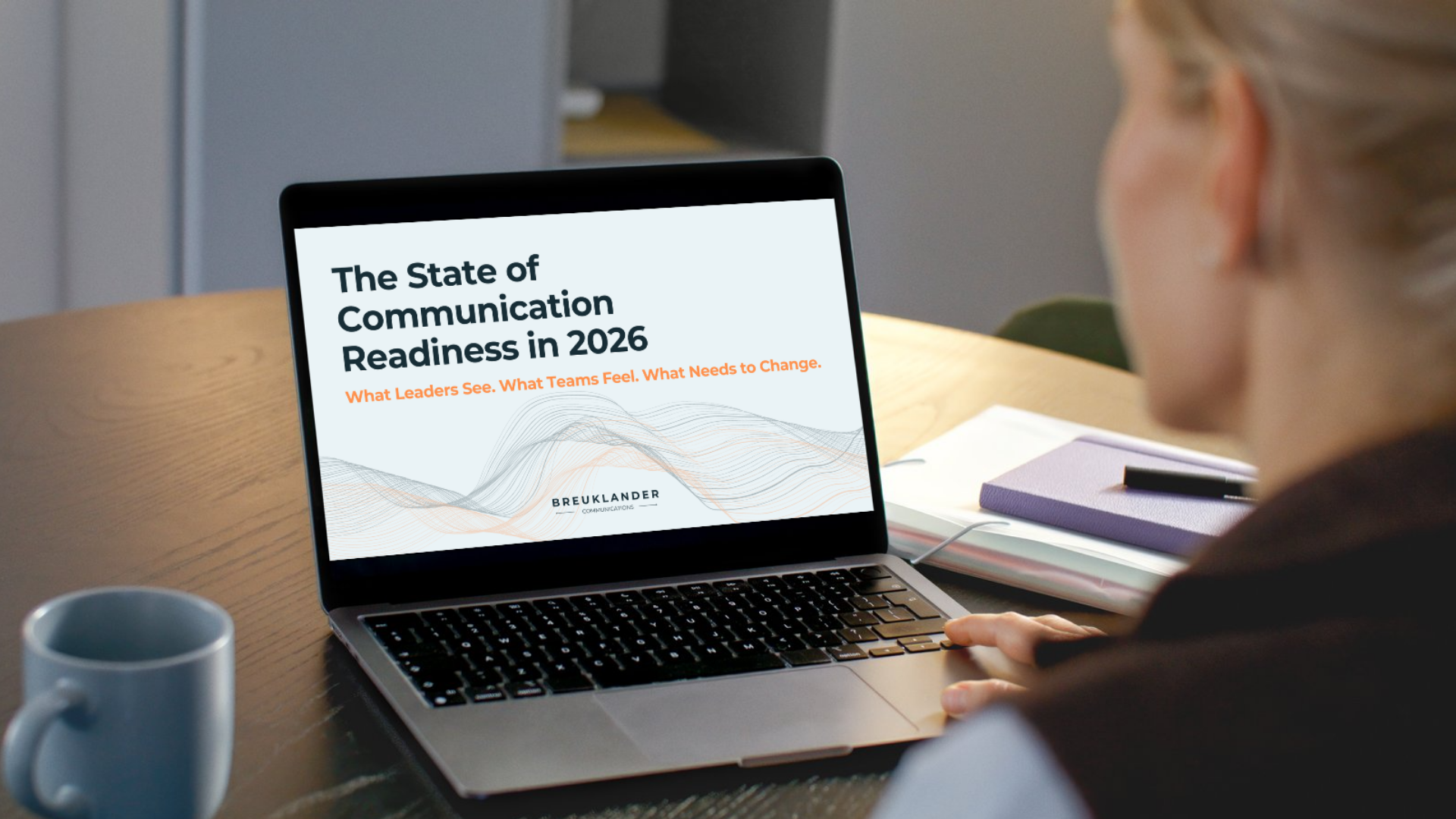
Next week, I’ll release The State of Communication Readiness in 2026 report.
A comprehensive look at the confidence, capability, and clarity gaps shaping the communications profession and what leaders need to do next.
It’s the clearest picture yet of what communicators will work through, what organizations are missing, and what readiness truly looks like in a year defined by complexity.
If you’re a communication leader preparing your strategy for 2026, you’ll want to read this.